
How Elastic Cords Improve Textile Manufacturing Efficiency
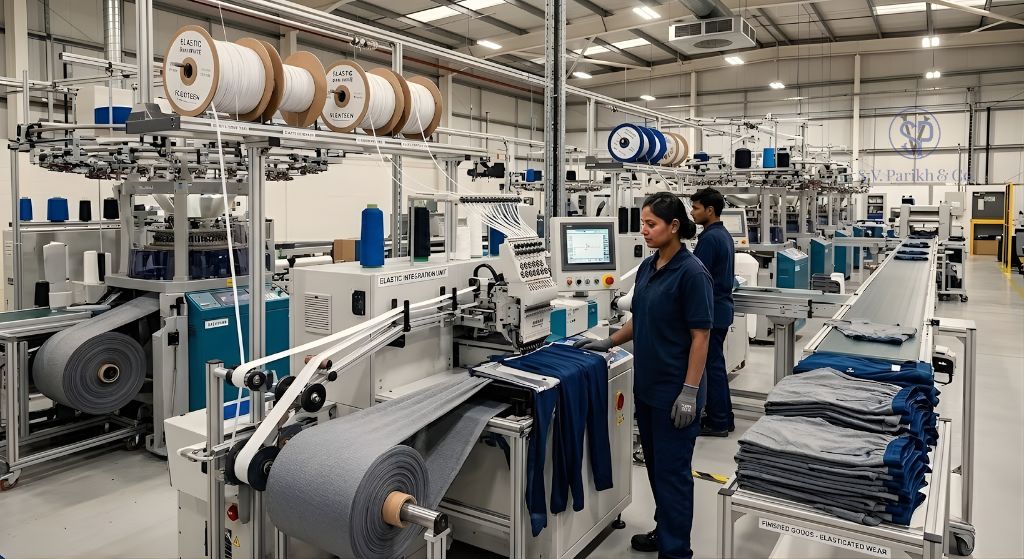
The textile manufacturing industry is undergoing rapid transformation as it adapts to increasing demands for faster production, consistent quality, and cost efficiency.
While large-scale technologies often take centre stage, smaller components can have an equally significant impact on overall performance.
One such component is the elastic cords. Widely used across various stages of textile production, from garment construction to finishing.
It contributes to process stability, product uniformity, and operational efficiency. Understanding high-quality elastic solutions helps manufacturers reduce waste, minimise downtime, and improve product quality.
By exploring how these versatile elements function in modern textile systems, businesses can better optimise their production processes and meet evolving market expectations.
Understanding Elastic Cords in Textile Production
Elastic cords are flexible materials designed to stretch and return to their original shape. Manufacturers use them in a wide range of textile applications.
These include waistbands, sportswear, medical textiles, and industrial fabrics. Their structure allows them to handle repeated tension without losing strength.
They are also extensively used in textile machinery for smooth and efficient operations.
This quality makes them reliable for high-speed production environments. They also adapt easily to different fabric types and product designs.
Enhancing Production Speed
Speed plays a crucial role in textile manufacturing. Delays can affect delivery timelines and overall productivity. The stretchable components of cords help streamline several processes.
They allow quicker assembly in garments that require stretch features. Workers and machines handle them with ease. This reduces the time spent on adjustments or corrections.
Automated systems also work efficiently with elastic cords. Their consistent elasticity ensures smooth feeding and stitching. As a result, production lines maintain a steady pace without interruptions.
Improving Product Consistency
Consistency defines quality in textile manufacturing. Customers expect uniformity across every batch, and these flexible materials help achieve that goal.
They provide an even stretch across all units, ensuring garments fit properly and perform as expected.
This reduces variations that can lead to rework or rejection. Their long-term stability also supports reliable large-scale production, strengthening brand trust in the market.
Reducing Material Waste
Material waste increases production costs. It also affects sustainability goals. Elastic cords help reduce waste in multiple ways.
They resist breakage during production, resulting in fewer discarded materials. Their adaptability allows precise cutting and efficient application, enabling better material planning.
This leads to optimised resource usage, which supports environmentally responsible manufacturing practices.
Lower waste also supports environmentally responsible manufacturing practices.
Supporting Design Flexibility
Modern textile products demand innovation. Designers look for materials that offer both function and creativity. Elastic cords provide this flexibility.
They integrate easily into various designs, especially in modern garments where stretch, comfort, and fit are essential. Learn how elastic cords enhance modern garment design.
From simple garments to complex technical textiles, they offer multiple possibilities. Designers can experiment with fit, shape, and structure.
Enhancing Durability of Finished Products
Durability matters for customer satisfaction. Products must withstand regular use and washing. They improve the lifespan of textile items.
They retain elasticity even after repeated stretching. This prevents sagging or deformation in garments. As a result, products maintain their original form for longer.
Strong and reliable components reduce the need for frequent replacements. This adds value for both manufacturers and end users.
Supporting Automation and Modern Machinery
Textile manufacturing increasingly relies on automation. Machines require materials that perform consistently under controlled conditions. Elastic cords meet this requirement.
They feed smoothly into automated systems. Their uniform structure reduces machine errors. This leads to fewer stoppages and maintenance issues.
Automation combined with high-quality materials improves overall efficiency.
Cost Efficiency in the Long Run
Cost control remains a top priority in textile production. While initial material selection is important, long-term performance plays an even bigger role.
This flexible cord contributes to cost efficiency by reducing waste, improving speeds, and minimising defects.
Their durability also lowers repair and replacement costs, leading to better profit margins and sustainable growth.
Meeting Industry Standards and Expectations
The textile industry operates under strict quality standards. These materials help manufacturers meet technical specifications and customer expectations through consistent performance.
Reliable inputs simplify quality control processes, reduce defects, and ensure smoother inspections and approvals for enhancing overall operational efficiency.
Efficiency in textile manufacturing depends on the right combination of materials, processes, and technology. Elastic cords bring these elements together by improving speed, reducing waste, and supporting consistent quality.
As the industry continues to evolve, the role of dependable components becomes even more critical.
If you are looking to enhance your production efficiency, choosing the right materials is essential. Explore high-quality cords with S.V. Parikh & Co. and take a step toward smarter, more efficient manufacturing.
