
Elastic Cords for Packaging: Why Manufacturers Choose Durable Options
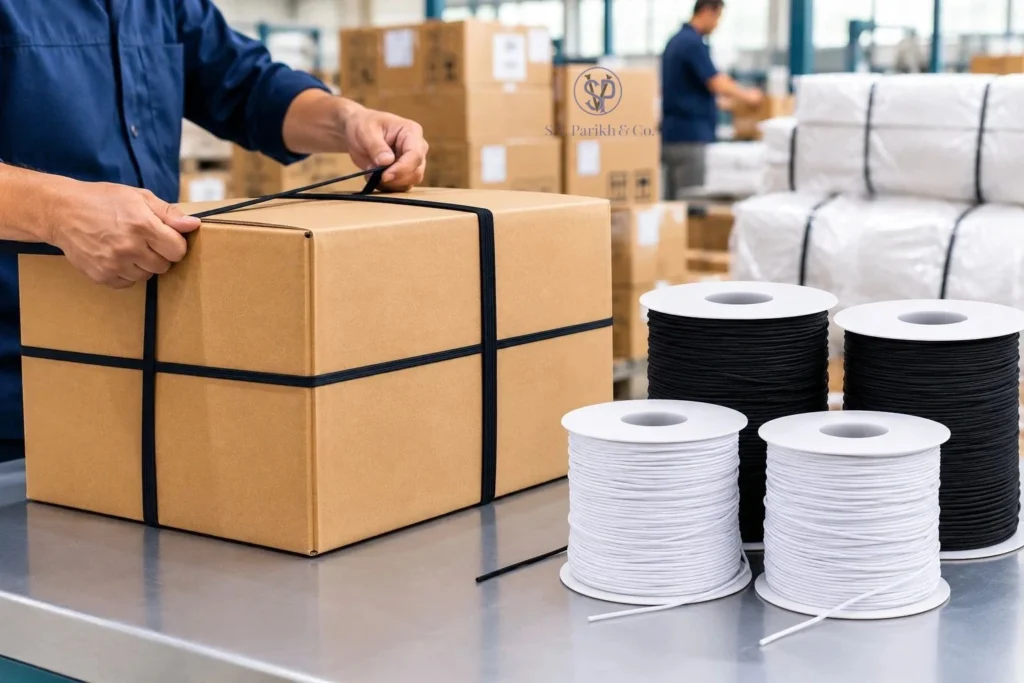
Packaging manufacturers need fastening materials that keep products secure during handling, storage, and transportation. Elastic cords offer flexibility and controlled tension for stretchable fastening. Understanding packaging material and waste requirements also helps manufacturers make informed packaging decisions.
However, cord quality directly affects performance. Cords that lose elasticity or wear out quickly can loosen around products and require frequent replacement. Choosing durable elastic cords for packaging helps improve fastening consistency, handling efficiency, and material costs.
The right cord supports smoother packaging operations and meets specific production needs. Understanding its features and benefits helps manufacturers choose suitable options for regular and bulk orders.
Why Packaging Manufacturers Need Durable Elastic Cords
Packaging cords experience repeated stretching, friction, and tension during everyday use. Their performance depends on the elastic core, outer covering, cord diameter, and the conditions in which workers use them.
A cord with poor elasticity may not return to its original length after repeated stretching. This can reduce its holding ability and make fastening less reliable. Similarly, a weak outer covering may suffer abrasion when it comes into contact with rough surfaces or sharp product edges.
Durable elastic cords for packaging help address these challenges when manufacturers select the right specifications for their applications. They provide suitable stretch, useful recovery, and dependable handling characteristics.
For businesses managing high production volumes, these properties become especially important. Consistent cord performance helps packaging teams reduce avoidable interruptions and maintain a steady workflow.
Key Benefits of Durable Elastic Cords
1. Better Stretch and Recovery
Elasticity allows a cord to extend when workers apply tension and contract when that tension decreases. This property makes elastic cords useful for securing products of different sizes.
However, stretch alone does not determine quality. Recovery also matters. A cord should return toward its original length after release and maintain useful performance through its intended service life.
Manufacturers should evaluate the required extension and recovery before selecting elastic cords for packaging. A cord that offers too little stretch can make fastening difficult, while excessive stretch may provide insufficient holding tension for the application.
Testing samples under normal working conditions helps buyers assess whether the cord suits their packaging process.
2. Greater Resistance to Wear
Repeated stretching and contact with product surfaces can gradually affect a cord’s construction. Friction may damage the outer covering, while excessive tension can strain the elastic core.
Durable cords with suitable materials and construction can better withstand the demands of their intended applications. Their performance depends on the working environment, handling method, and frequency of use.
For reusable packaging systems, wear resistance can help extend service life and reduce premature replacement. Manufacturers should also inspect cords regularly and replace damaged ones to maintain safe and reliable operation.
3. Consistent Product Holding
A packaging cord must provide appropriate tension to keep compatible products together. If the cord becomes loose, items may shift during handling. If it applies excessive pressure, it may damage delicate products or their packaging.
Well-selected elastic cords for packaging help manufacturers achieve a suitable balance between flexibility and holding force.
For example, a business that bundles lightweight packaged components needs a cord that fits the bundle securely without making removal difficult. The correct diameter, length, and elasticity help achieve this balance.
Manufacturers should consider product weight, dimensions, surface characteristics, and required holding tension before finalizing their cord specifications.
4. Improved Packaging Efficiency
Packaging teams often handle large quantities of products within fixed production schedules. Cords that break frequently or require repeated adjustments can slow down the process.
Suitable elastic cords allow workers to fasten and release products efficiently in applications designed for elastic fastening. Their flexibility also helps accommodate minor variations in product dimensions.
Reliable elastic cords for packaging can reduce interruptions caused by premature cord failure. This supports smoother workflows and helps teams use their time and packaging materials more effectively.
5. Better Control Over Replacement Costs
The purchase price of a cord does not tell the complete cost story. A cheaper cord may require more frequent replacement, increase material consumption, and create additional work for packaging teams.
Manufacturers should compare service life, failure rates, replacement frequency, and handling requirements when evaluating different options.
A durable cord can offer better long-term value when it performs consistently within its intended operating conditions. The objective is to select a product that meets the required specifications without paying for features the application does not need.
Common Packaging Applications for Elastic Cords
Elastic cords support different packaging and product-handling tasks where flexible fastening is appropriate.
- Product bundling – Keeping compatible products together during storage, sorting, and dispatch.
- Lightweight package fastening – Securing selected packages when the packaging design supports elastic fastening.
- Reusable packaging systems – Allowing workers to fasten and release items without replacing the cord after every use.
- Component organization – Grouping suitable parts or packaged items for easier identification and handling.
- Industrial product handling – Providing flexible restraint for applications that match the cord’s rated capabilities.
Each application has different requirements. Manufacturers should assess product weight, package shape, environmental exposure, and expected tension before selecting a cord.
Elastic cords are not substitutes for certified lifting equipment or purpose-designed heavy-load restraints. Buyers must choose products that meet the actual safety requirements of their applications.
How to Choose the Right Elastic Cord for Packaging
Choosing a suitable cord requires more than comparing prices or selecting a standard diameter. Manufacturers should assess the following factors before placing a bulk order.
Evaluate Material and Construction
The elastic core affects stretch and recovery, while the outer covering influences surface durability and resistance to abrasion. Ask the supplier about available constructions and their suitability for the intended application.
Check Diameter and Working Tension
Cord diameter influences handling and performance, but a thicker cord does not automatically provide the best solution. Consider the required holding force, package dimensions, and extension range. Test samples to determine whether the cord performs as expected.
Assess Repeated Stretching
If workers stretch and release the cord several times, evaluate its recovery after repeated cycles. Check for permanent elongation, visible damage, and changes in holding tension.
Confirm Quality and Supply Consistency
Bulk orders require consistent dimensions and construction across batches. Discuss product specifications, quality checks, order quantities, and delivery schedules with the manufacturer before confirming an order.
These checks help businesses choose elastic cords for packaging that align with their operational requirements and support repeat purchasing.
Choose an Experienced Elastic Cord Manufacturer
A suitable manufacturing partner helps buyers make informed decisions about cord specifications. The supplier should understand the intended application and provide clear information about available products, construction, and supply capabilities.
Manufacturing experience also matters when businesses need consistent products for recurring orders. Clear specifications and effective quality checks help reduce unwanted variation between batches.
Before choosing a supplier, evaluate its manufacturing background, product knowledge, specification control, and ability to meet your order requirements. This approach helps you focus on long-term performance rather than purchase price alone.
Strengthen Your Packaging Process With the Right Elastic Cords
Durable elastic cords help packaging manufacturers maintain suitable holding tension, handle products efficiently , and control replacement costs. Their performance depends on selecting the right combination of stretch, recovery, construction, and durability for each application.
If your packaging operations require dependable cords for regular production or bulk orders, the next step is to identify the specifications that match your products and working conditions.
Contact S.V.Parikh a 100+ year-old elastic cord manufacturing brand, to discuss your packaging requirements and explore suitable cord options. Share your application details, preferred dimensions, performance expectations, and order quantity to receive guidance on selecting the right product.
Request a quotation today and take the next step toward consistent packaging performance with an experienced elastic cord manufacturing partner.
