
Reliable Elastic Cord Supply for Garment Manufacturers During the Festive Season
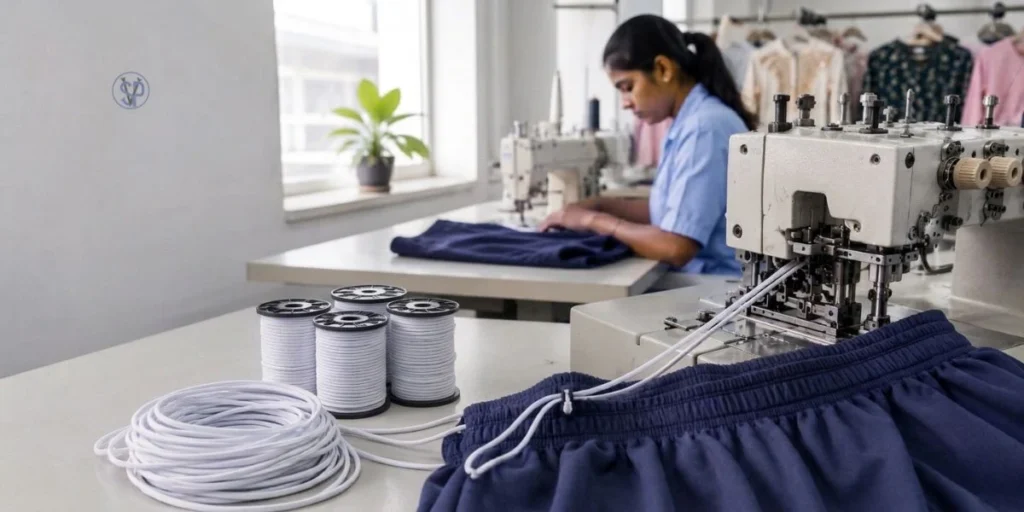
The festive season creates a different level of pressure for garment manufacturers. Production volumes increase. Order timelines become tighter. Retail demand becomes less flexible. Every component used in garment production must arrive at the right time and meet the required quality.
Elastic cords may look like a small component. However, they can affect the production of an entire garment line.
A delayed or inconsistent elastic cord supply can slow stitching, assembly, finishing, and dispatch. It can also create differences in garment fit and performance. During the festive season, manufacturers cannot afford these disruptions.
This is why a planned elastic cord supply for garment manufacturers becomes an important part of production readiness.
The goal is not simply to purchase more elastic cords. The goal is to maintain the right quality, specification, quantity, and delivery schedule throughout the production cycle.
Festive Season Production Leaves Little Room for Delays
Festive collections often involve large production runs within limited timelines. Manufacturers handle higher volumes of dresses, activewear, kidswear, innerwear, casual apparel, and other stretch-based garments.
A production line depends on the availability of every required component. Fabric alone cannot keep production moving. Threads, trims, fasteners, and elastic materials must also remain available.
When an elastic cord shipment arrives late, manufacturers may need to stop or reschedule specific production batches. This creates pressure across the entire workflow.
A consistent elastic cord supply for garment manufacturers helps reduce this risk. It allows production teams to plan cutting, stitching, assembly, quality checks, and dispatch with greater confidence.
Festive production requires continuity. A reliable supply partner helps support that continuity.
Elastic Cord Consistency Supports Garment Quality
Garment manufacturers need more than a steady quantity of material. They also need consistent performance.
Elastic cords must maintain the required stretch and recovery for their intended application. A change in cord performance can affect garment fit. It can also create differences between one production batch and another.
For example, a cord that stretches differently from the approved sample can affect the finished product. A weak or inconsistent cord can lose performance after repeated use. This may lead to customer complaints, rework, or rejected shipments.
The role of quality elastic cords for machinery and manufacturing applications also helps manufacturers recognize why consistent specifications matter across demanding production environments.
During the festive season, there is less time to identify and correct such issues. Manufacturers need materials that support the approved product specification from the first batch to the last.
A reliable elastic cord supply for garment manufacturers helps maintain this consistency across high-volume production.
Changing Suppliers During Peak Demand Creates Avoidable Risks
Some manufacturers depend on multiple suppliers without a clear supply plan. This approach can become difficult during peak production periods.
A new supplier may offer a similar product. However, similar does not always mean identical.
The diameter may vary. The stretch level may change. The construction may feel different. The recovery may not match the approved material. Even small differences can affect the finished garment.
Manufacturers also need to understand common quality issues in elastic cords and how to avoid them before placing high-volume orders.
Switching suppliers during the festive season can create additional sampling, testing, and approval work. Production teams then spend valuable time checking materials instead of focusing on output.
A planned elastic cord supply for garment manufacturers reduces the need for last-minute sourcing decisions.
It allows manufacturers to approve the right specification early and continue production with the same material standard.
The Right Elastic Cord Depends on the Garment Application
Not every garment requires the same elastic cord.
Different products need different levels of stretch, strength, recovery, thickness, and durability. An elastic cord used in a lightweight garment may not suit an application that experiences frequent stretching.
Manufacturers should select the product according to the actual use of the garment.
For applications that experience continuous movement, knowledge of rubber dori for repeated stretch applications becomes especially important. Repeated stretching can place continuous stress on the elastic component. The right construction helps the garment maintain its intended function.
Similarly, buyers should evaluate the best elastic string for different garment manufacturing needs instead of selecting a product based only on availability or price.
The festive season increases the importance of this decision. Large production volumes can multiply the impact of one incorrect material choice.
A consistent elastic cord supply for garment manufacturers begins with selecting the right product before production reaches its peak.
Bulk Orders Need Better Forecasting
Festive demand should not lead to panic buying.
Garment manufacturers can improve procurement by estimating their elastic cord requirement before peak production begins. This estimate should consider confirmed orders, expected repeat orders, product variations, wastage, and production schedules.
The manufacturer should also identify which garment categories require the highest volume of elastic cords.
This approach supports better inventory planning. It also helps avoid two common problems. The first is overstocking. The second is running out of material before production is complete.
A well-planned elastic cord supply for garment manufacturers connects purchasing decisions with the actual production forecast.
Manufacturers can also maintain a practical reorder schedule. Instead of waiting until stock reaches a critical level, they can plan replenishment according to production speed and delivery requirements.
This creates better control during periods of high demand.
Braided Construction Can Support Different Garment Requirements
Elastic cord construction plays an important role in performance.
Braided elastic cords can serve a wide range of applications depending on their design and intended use. The construction can influence handling, flexibility, durability, and overall performance.
The application of braided elastic cords across everyday products helps manufacturers evaluate where this type of construction fits into their product range.
The same principle applies across industries. The different types of elastic cords used across industries can help buyers understand how cord specifications change according to the application.
For garment manufacturers, the key is to avoid treating all elastic cords as interchangeable.
The product should match the garment design and performance requirement. This decision becomes even more important when festive orders involve several product categories.
A dependable elastic cord supply for garment manufacturers supports this process by making approved specifications available when production requires them.
Reliable Supply Supports Better Production Scheduling
Production planning becomes easier when material availability is predictable.
Manufacturers can schedule work more efficiently when they know the required elastic cords are available for each production batch. They can reduce unnecessary changes to the production sequence.
This also helps purchasing and production teams work with better coordination.
A consistent elastic cord supply for garment manufacturers supports smoother communication between sourcing, production, and quality teams.
The supplier should understand the importance of repeat specifications and scheduled deliveries. The relationship should support long-term production requirements instead of one-time purchasing decisions.
This is particularly important during the festive season. Demand can change quickly. Production schedules can tighten without much notice.
A prepared supply chain gives manufacturers more flexibility to respond without compromising material quality.
Quality Control Should Continue Throughout the Season
Material approval at the start of the season is important, but quality checks should continue with every shipment.
Manufacturers should check size, stretch, recovery, finish, and suitability before the material enters production. A clear inspection process helps identify variation without disrupting workflow.
The textile and apparel industry also benefits from stronger supply chain consistency and coordination, as highlighted by Textile Exchange.
For garment manufacturers, the result is simple. Better consistency reduces disruption. A dependable elastic cord supply for garment manufacturers supports smooth production and consistent product quality.
Build Your Festive Season Supply Before Demand Peaks
The festive season does not leave much time to solve supply problems after they appear.
Garment manufacturers need to prepare before production reaches its highest level. They need the right elastic cord specification. They need consistent quality. They need planned quantities. Most importantly, they need a supply partner that understands the demands of large-scale garment manufacturing.
A strong elastic cord supply for garment manufacturers helps keep production moving when order volumes increase.
It reduces the pressure of last-minute sourcing. It supports consistent garment performance. It also gives manufacturers better control over production schedules.
For buyers looking to build a reliable supply arrangement, S.V.Parikh brings more than 100 years of manufacturing experience to the elastic cord industry. The focus remains on understanding product requirements and supporting bulk manufacturing needs with dependable supply and consistent specifications.
