
7 Common Elastic Cord Quality Issues That Delay Bulk Garment Production
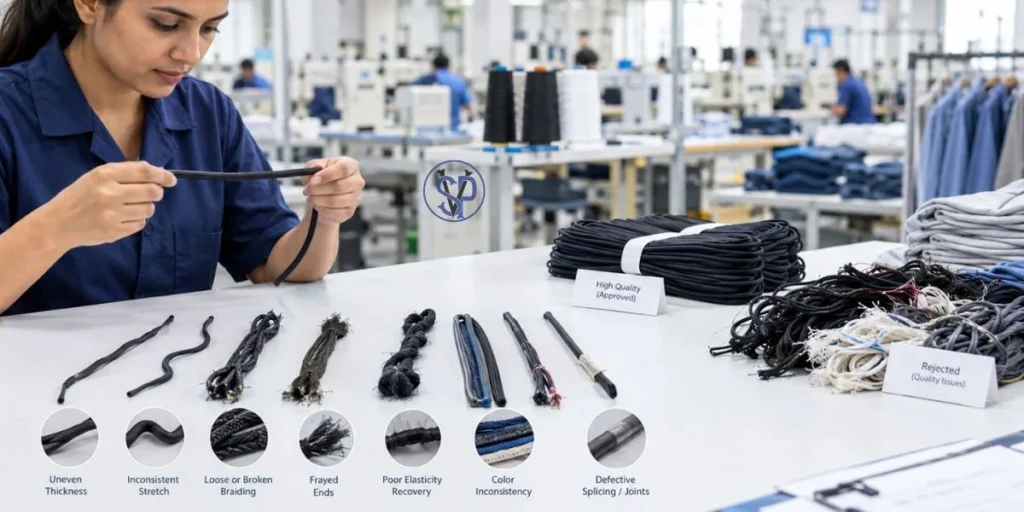
Bulk garment production depends on consistency. Every material must perform as expected across thousands of garments. Elastic cords play an important role in this process by supporting fit, flexibility, comfort, and garment durability.
As part of the broader textiles and clothing industry, garment manufacturers need materials that deliver consistent performance throughout production.
A small cord defect can create a much larger production problem. Uneven stretch can affect garment dimensions, while weak construction can cause breakage during sewing. Poor recovery can also affect the final fit. These elastic cord quality issues can lead to rework, material waste, production delays, and rejected garments.
For garment manufacturers, choosing an elastic cord is not only about getting the right size. The cord must match the application and maintain consistent performance throughout bulk production. Understanding common elastic cord quality issues helps manufacturers identify potential risks early and choose the right product for their production requirements.
1. Inconsistent Stretch Creates Production Variations
Stretch performance directly affects how an elastic cord works inside a garment. The cord needs to provide controlled elongation based on the application.
When stretch varies along the cord or between batches, production teams can face inconsistent garment dimensions. Some sections may feel tighter, while others may provide less tension.
This problem can affect waistbands, cuffs, activewear, fitted garments, and other applications that depend on controlled elasticity.
Inconsistent stretch is one of the most important elastic cord quality issues because it can affect both production and final garment performance.
Manufacturers should check the required elongation before bulk production. They should also compare samples from different batches. A consistent elastic cord helps production teams maintain uniform results.
2. Poor Recovery Affects Garment Fit
An elastic cord needs more than a good stretch. It also needs reliable recovery.
Recovery refers to how well the cord returns toward its original length after stretching. Poor recovery can make the garment lose its intended fit over repeated use.
This issue matters in garments that experience frequent movement and stretching. Sportswear, activewear, underwear, children’s clothing, and fitted garments often require dependable recovery.
Poor recovery is another common category of elastic cord quality issues. It can reduce garment performance and increase customer complaints.
Manufacturers should test stretch and recovery together. Selecting a cord with suitable recovery helps maintain the intended garment structure for longer.
3. Uneven Thickness Disrupts Smooth Production
Cord thickness needs to remain consistent throughout the product. Even small dimensional variations can affect handling and stitching.
An uneven cord may feed differently through sewing operations. It can also create inconsistent tension or visible differences in the finished garment.
These elastic cord quality issues can become more expensive during bulk production. A minor variation that affects one piece can affect hundreds or thousands of garments when the same material is used across a production run.
Manufacturers should define the required diameter or size before ordering. They should also work with a supplier that maintains dimensional consistency during manufacturing.
4 Weak Construction Increases Breakage
Elastic cord construction directly affects strength and durability. The cord must withstand the stress created during handling, stitching, stretching, and regular garment use.
Weak construction can cause the cord to break or lose its structure. Fractured or damaged sections can slow sewing operations and increase material waste.
These elastic cord quality issues are especially costly when they appear after bulk production starts. Production teams may need to stop machines, replace material, or inspect completed garments.
Manufacturers should consider the cord’s construction, tensile strength, and intended application before approving a product. The cord should provide the required strength without compromising flexibility.
5. Fraying Makes Cutting and Sewing Difficult
Fraying can create problems during both production and finishing.
When an elastic cord loses fibers easily, operators may find it harder to handle and sew. Loose fibers can also affect the appearance of the finished garment.
Frequent fraying increases material waste. It can also increase the time required for inspection and trimming.
These elastic cord quality issues become more significant in high-volume garment manufacturing. Even a small percentage of defective material can create measurable production losses.
A suitable cord should maintain its construction during normal cutting, handling, and sewing operations. Manufacturers should inspect the cord before approving it for large-scale production.
6 Color and Finish Variations Affect Consistency
Elastic cords can also contribute to the visual quality of a garment. This becomes important when the cord remains visible or works with exposed garment sections.
Color variation between batches can create an inconsistent appearance. Differences in surface finish can also affect texture, feel, and overall presentation.
These elastic cord quality issues can result in material rejection when manufacturers need strict batch consistency.
Buyers should confirm color, finish, and appearance requirements before placing a bulk order. Clear specifications help suppliers maintain consistency across production batches.
7 Choosing the Wrong Cord Creates Avoidable Problems
Not every elastic cord suits every garment application.
A cord may provide good performance in one garment but fail to meet the requirements of another. The required stretch, recovery, strength, thickness, flexibility, and construction can vary by product.
Choosing a cord based only on price can therefore create unnecessary production problems.
Incorrect product selection is one of the most avoidable elastic cord quality issues.
Manufacturers should first identify the garment requirement. They should then select the cord based on application, dimensions, performance, sewing process, and expected use.
The right product reduces the need for production adjustments and supports consistent garment output.
What Manufacturers Should Check Before Bulk Production
Manufacturers can reduce elastic cord quality issues by evaluating the product before approving a large order.
Key checks include:
- Stretch and elongation
- Recovery performance
- Cord diameter and consistency
- Tensile strength
- Construction quality
- Fraying resistance
- Color consistency
- Surface finish
- Application suitability
- Batch-to-batch consistency
Sample approval should also reflect actual production conditions. A cord may perform well during a basic sample check but behave differently during continuous cutting and sewing.
Manufacturers should therefore evaluate the cord based on the actual requirements of the garment.
Why Consistent Manufacturing Matters
Quality elastic cord supports more than the finished garment. It supports the entire production process.
Consistent dimensions improve handling. Reliable stretch supports uniform fit. Good recovery helps maintain garment shape. Strong construction reduces breakage. Stable finishing improves product appearance.
This makes quality control an important part of elastic cord manufacturing.
A reliable manufacturer should maintain defined product specifications and consistent production standards. The supplier should also understand the requirements of bulk garment production.
Reduce Production Delays With the Right Elastic Cord
Bulk garment manufacturing leaves little room for material variation. A single cord problem can repeat across a large production run.
Stretch variation, poor recovery, uneven thickness, weak construction, fraying, finish variation, and incorrect product selection can all create delays.
The better approach is to identify the required cord specifications before production begins. Manufacturers should test the product, confirm its suitability, and select a supplier that can maintain quality across bulk orders.
The right elastic cord does more than complete a garment. It helps maintain production efficiency, product consistency, and customer expectations.
Choose a Reliable Elastic Cord Manufacturing Partner
When garment production depends on consistent stretch, recovery, strength, and construction, product quality becomes a production priority.
S.V.Parikh combines more than 100 years of manufacturing experience with a focus on dependable elastic cord solutions for demanding applications and bulk requirements.
If you need elastic cords for garment production, do not let material inconsistency slow your manufacturing line.
Contact S.V.Parikh to discuss your elastic cord requirements, product specifications, and bulk production needs. Choose the right elastic cord for consistent garment manufacturing.
