
How to Select Elastic Cords for Winter Jacket Manufacturing
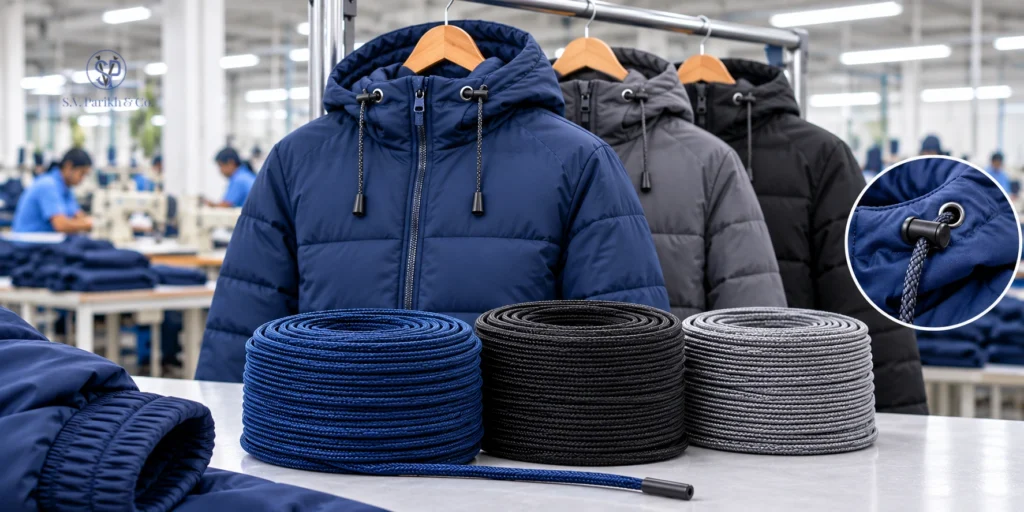
Winter jackets require strong and flexible components to deliver a comfortable fit and reliable performance. Along with quality fabric, insulation, and stitching, elastic cords play an important role in jacket construction. They help manufacturers create adjustable hoods, secure waistlines, improve sleeve fittings, and tighten jacket hems.
The choice of elastic cord directly affects the jacket’s fitting, functionality, and durability. A cord with poor stretch recovery may become loose after repeated use. Similarly, an unsuitable diameter may create problems during threading or adjustment.
For garment manufacturers, selecting the right elastic cords for winter jacket production requires attention to cord construction, diameter, elasticity, and strength. Different jacket applications need different cord specifications. This guide explains which elastic cords work best, what diameters manufacturers can consider, and how to select the right product for consistent bulk production.
Understanding the Role of Elastic Cords in Winter Jackets
Winter jackets use elastic cords in several areas to improve fitting and adjustment. These cords allow users to tighten or loosen different sections according to their comfort.
Common applications include:
- Hood adjustments – Elastic cords help users tighten the hood around the head and maintain a secure fit.
- Waist adjustments – They help control the jacket’s fitting around the waist.
- Sleeve openings – They support adjustable sleeve designs and help reduce gaps around the wrists.
- Bottom hems – They allow users to tighten the lower part of the jacket and limit cold air entry.
- Neckline adjustments – They provide additional fitting support around the collar area.
Each application requires suitable stretch, strength, and thickness. Therefore, manufacturers should select cords according to the jacket’s design and intended use.
Which Types of Elastic Cords Are Best for Winter Jackets
Not every elastic cord offers the same performance. Cord construction affects flexibility, stretch, surface texture, and durability. Two commonly suitable options for winter jacket manufacturing are braided and knitted elastic cords.
1. Braided Elastic Cords
Braided elastic cords are a suitable choice for winter jackets that require dependable adjustment and repeated stretching. Their braided outer construction provides a compact structure and helps protect the elastic core.
These cords work well for:
- Adjustable jacket hoods
- Waist adjustment systems
- Bottom hem tightening
- Drawstring applications
Braided cords offer good flexibility and suitable strength for regular handling. They also work with compatible cord locks and eyelets.
For manufacturers looking for versatile elastic cords for winter jacket applications, braided cords are a strong option to consider.
2. Knitted Elastic Cords
Knitted elastic cords have a flexible construction that supports comfortable stretching. They suit jacket designs that require a softer feel and easy movement.
Manufacturers can consider them for:
- Lightweight jacket adjustments
- Flexible sleeve openings
- Waist fitting applications
- Garment sections that require regular stretching
The final choice depends on the required tension, recovery, and construction quality.
Which One Should Manufacturers Choose
Braided elastic cords are a strong starting choice for hood, waist, and hem adjustment systems that require regular handling. Knitted elastic cords suit applications where flexibility and softer handling are important.
Manufacturers should test both constructions against the jacket design before finalizing bulk specifications.
What Diameter of Elastic Cord Is Best for Winter Jackets
Cord diameter plays an important role in jacket functionality. The correct thickness supports smooth threading, proper adjustment, and compatibility with cord locks.
Here are some practical diameter ranges for different winter jacket applications.
Choose cord diameter based on jacket design and channel size. Smaller cords (2–3 mm) suit lightweight jackets, while thicker cords (4–6 mm) support heavier applications.
| Cord Diameter | Suitable Applications |
| 2 mm | Lightweight hood adjustments and narrow channels |
| 3 mm | Standard hood drawstrings and lightweight jackets |
| 4 mm | Hood, waist, and hem adjustments |
| 5 mm | Heavy winter jackets and stronger adjustment requirements |
| 6 mm | Selected heavy-duty jacket designs with larger channels |
For most standard winter jacket designs, 3 mm to 5 mm elastic cords provide useful starting options.
However, the correct diameter depends on the jacket’s construction. A thicker cord may not pass through a narrow channel or small cord lock. A thinner cord may not provide the required strength for a particular application.
Manufacturers should check the opening size, cord lock compatibility, and required tension before selecting the final diameter.
Important Factors to Consider When Selecting Elastic Cords
Choosing the right cord involves more than selecting its construction and thickness. Manufacturers should also evaluate the following performance factors.
Stretchability and Recovery
Stretchability determines how far a cord extends under tension. Recovery describes how well it returns to its original length after stretching.
Winter jacket adjustments require consistent stretch and recovery. A cord with poor recovery may become loose and affect the jacket’s fitting.
Select the high-stretch elastic cords that maintain suitable elasticity after repeated use.
Tensile Strength and Durability
Tensile strength indicates how much pulling force a cord can withstand before breaking. Hood and waist adjustment cords experience regular pulling during everyday use.
A durable cord should maintain its structure and performance under repeated tension. This helps reduce breakage and replacement issues.
Cold-Weather Flexibility
Winter jackets operate in cold outdoor conditions. Their elastic components must retain suitable flexibility during regular use.
Manufacturers should discuss temperature requirements with their supplier and test cord samples under relevant conditions. This helps confirm whether the selected material suits the intended application.
Consistent Cord Construction
Differences in thickness, braiding, and elasticity can affect garment quality. Consistent construction supports smooth threading, uniform adjustment, and better finishing across production batches.
Why Cord Quality Matters in Bulk Winter Jacket Production
Bulk garment manufacturing requires consistent raw materials. Even small differences in elastic cord specifications can affect the final product.
Poor-quality cords may cause:
- Uneven jacket fitting across different sizes
- Loss of elasticity after repeated stretching
- Breakage during regular use
- Difficulties during threading and assembly
- Increased material rejection and production delays
Working with an experienced elastic cord manufacturer helps garment manufacturers maintain consistent product specifications.
Before placing bulk orders, check cord samples, confirm diameters, evaluate stretch recovery, and discuss production requirements. Clear specifications also help maintain consistency in repeat orders.
How to Choose the Right Elastic Cord Supplier
A reliable supplier supports more than product availability. The supplier should understand garment applications and provide suitable cord options for different manufacturing requirements.
Consider these points before selecting a supplier.
- Manufacturing experience – Look for experience in elastic cord manufacturing and bulk supply.
- Product variety – Check the availability of different constructions, diameters, and specifications.
- Quality consistency – Confirm that the supplier maintains uniform thickness, strength, and elasticity.
- Bulk production capacity – Choose a supplier who can support your order quantities and production schedules.
- Customization options – Discuss specific diameter, stretch, and construction requirements.
The right elastic cord supplier helps manufacturers maintain garment quality and manage bulk production more efficiently.
Make the Right Elastic Cord Choice for Winter Jacket Manufacturing
Selecting suitable elastic cords improves jacket fitting, adjustment, and overall functionality. Braided elastic cords offer a versatile option for hood, waist, and hem adjustments, while knitted elastic cords support applications that require flexible and softer handling.
Manufacturers can consider diameters from 2 mm to 6 mm according to the application, jacket design, and adjustment requirements. Testing the cord’s strength, recovery, and cold-weather flexibility also helps ensure reliable performance.
The right combination of cord construction, diameter, and quality supports consistent winter jacket production and better garment finishing.
Partner With S.V. Parikh for Quality Elastic Cords
With over 100 years of manufacturing experience, S.V. Parikh understands the importance of quality, consistency, and reliable bulk supply. As an established elastic cord manufacturing brand, we offer solutions for different garment and industrial applications.
Whether you need braided elastic cords for hood adjustments or suitable cord specifications for waist and hem fittings, our team supports your bulk manufacturing requirements.
